

Dragonball Has Never Been More Popular, Yet Parts of the Community Feel Less Welcoming
Dragonball is one of the biggest anime franchises in the world, and every year new fans discover it for the very first time. Whether someone starts with the original Dragonball, Dragonball Z, Dragonball Super, Daima, Sparking! ZERO, or even through social media clips, the important thing is that they’re finding something to love about the series. As someone who’s been creating Dragon Ball content for years, I love seeing new people join the community because fresh perspectives keep the fandom alive.
Unfortunately, I’ve also noticed a growing problem. Some fans in the Dragonball community aren’t interested in welcoming new fans—they’re interested in proving they’re smarter than everyone else. Between extreme powerscaling debates and fans who treat Dragon Ball knowledge like a competition, it’s becoming harder for newcomers to simply enjoy the series without feeling like they’re being tested.
When Every Conversation Turns Into a Debate

There’s absolutely nothing wrong with powerscaling. In fact, I think it’s one of the reasons Dragon Ball has remained relevant for decades. Asking whether Goku could beat Jiren, debating Ultra Ego versus Ultra Instinct, or comparing different eras of Vegeta can be genuinely fun when everyone is respectful.
The problem starts when powerscaling becomes the only way people know how to engage with Dragon Ball.
I’ve seen someone make an appreciation post about Gohan, only for the comments to immediately become arguments about whether he’s stronger than Broly. Someone shares their favorite transformation, and instead of discussing why they love it, people start telling them why it’s “objectively wrong.” Even simple conversations about favorite arcs somehow become essays about power levels instead of celebrating what made those stories memorable.
At that point, the discussion stops being enjoyable and starts feeling like an argument waiting to happen.
Not Everything Needs to Be “Debunked”

One trend I’ve noticed over the past few years is the obsession with correcting people.
Someone says they think Future Trunks is their favorite character.
“Actually...”
Someone says they enjoyed Dragon Ball GT.
“Actually...”
Someone says they think Beast Gohan is one of the strongest characters.
“Actually...”
There’s a difference between having a discussion and constantly trying to prove someone wrong. Dragon Ball is supposed to be fun. It isn’t a college exam where everyone has to defend every opinion with scans, guidebooks, and chapter numbers.
Sometimes people simply like a character because they grew up with them.
That should be enough.
Elitism Doesn’t Create Better Fans
One thing I’ve never understood is why some fans act like watching Dragon Ball is some kind of exclusive club. If someone only watches the anime and hasn’t read the manga, they’re told their opinion doesn’t matter. If someone enjoys Dragon Ball Daima, they’re told they don’t understand “real Dragon Ball.”
Who does that help?
Every longtime fan was once a newcomer. None of us were born knowing every transformation, every saga, or every piece of Dragon Ball lore. We all learned because we enjoyed the series, not because someone interrogated us about obscure facts before allowing us to participate.
A healthy fandom should encourage curiosity, not punish it.
Women Still Deal With an Extra Layer of Gatekeeping
This is the part that hits closest to home for me.
As a woman who creates Dragon Ball content, I’ve experienced firsthand how differently women are treated in this community. Instead of discussing the content we create, some people immediately assume we don’t know what we’re talking about. I’ve lost count of how many times I’ve seen women asked to “prove they’re real fans” by answering trivia questions that men are almost never asked.
Imagine introducing yourself as a Dragonball fan and your first interaction is someone trying to quiz you instead of having a conversation.
That’s exhausting.
What’s even more frustrating is that many women genuinely love Dragonball. They’re collecting figures, reading the manga, attending conventions, playing the games, and creating incredible content. Yet some people still assume they’re only here for attention or because Dragonball suddenly became popular.
That mindset doesn’t protect the community.
It pushes people away from it.
Being Knowledgeable Isn’t the Same as Being Welcoming
I love learning obscure Dragonball facts. I enjoy reading interviews, comparing manga panels, discussing lore, and diving into character analysis. Having knowledge about the series is great.
Using that knowledge to belittle other fans isn’t.
There’s a huge difference between sharing information and using information as a weapon. The best Dragonball fans I’ve met are the ones who get excited when someone asks a question because it gives them an opportunity to share something they love.
The worst are the ones who treat every conversation like an opportunity to establish dominance.
One grows the community.
The other shrinks it.
Dragonball Is Bigger Than Power Levels
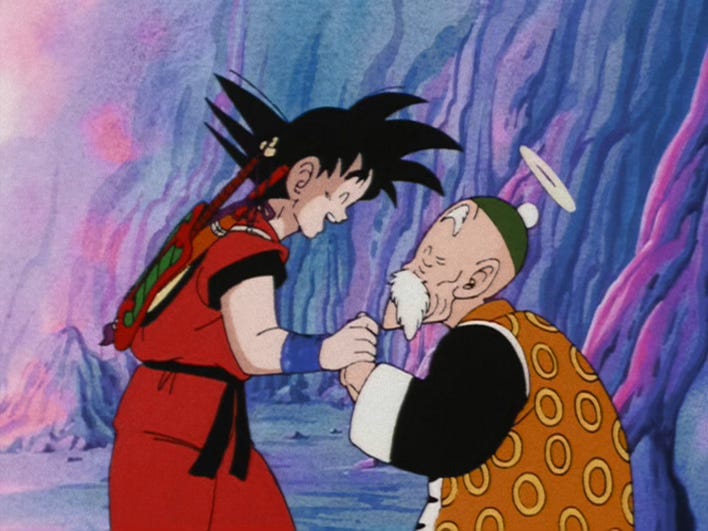
Sometimes I think people forget why Dragonball became so successful in the first place. Yes, the fights are incredible. Yes, the transformations are iconic.
But Dragonball is also about adventure, perseverance, friendships, family, redemption, sacrifice, and constantly striving to become a better version of yourself. Those themes are why the series has connected with generations of fans around the world.
If every conversation is reduced to “Who wins?” or “Your opinion is wrong,” we’re missing so much of what makes Dragon Ball special.
Not every fan experiences the series in the same way, and that’s okay.
Final Thoughts
I don’t think powerscaling is ruining Dragonball. I don’t think having deep knowledge of the series is ruining Dragon Ball either. Both can make the fandom more enjoyable when they’re approached with the right attitude.
What hurts the community is when powerscaling becomes elitism and knowledge becomes gatekeeping.
If new fans are afraid to ask questions because they’ll be mocked, that’s a problem. If women have to constantly prove they belong before their opinions are respected, that’s a problem. If every discussion turns into a competition over who knows more instead of celebrating a series we all love, that’s a problem too.
Dragon Ball has survived for decades because it continues to bring new people into its world. The community should reflect that same spirit. Instead of trying to decide who qualifies as a “real fan,” maybe we should spend more time doing what brought us here in the first place—sharing our love for Dragon Ball.

Black bulmaa I agree 100% because I've never been a power scaler and I definitely never have never been a GateKeeper I love that all women love dragon ball and I have always appreciated your incredible knowledge about dragon Ball I just hate to see the excitement get taken away when you have somebody correcting you every 5 seconds about some little minuscule fact or they talking about the fact that you're a fake fan dragon Ball at its core is always the best when all the fandom can come together enjoy and talk about what they love about the series